In Part VI we take a look at Alistair Fox's book Coming of Age Cinema in New Zealand: Genre, Gender and Adaptation as my first theoretical text.
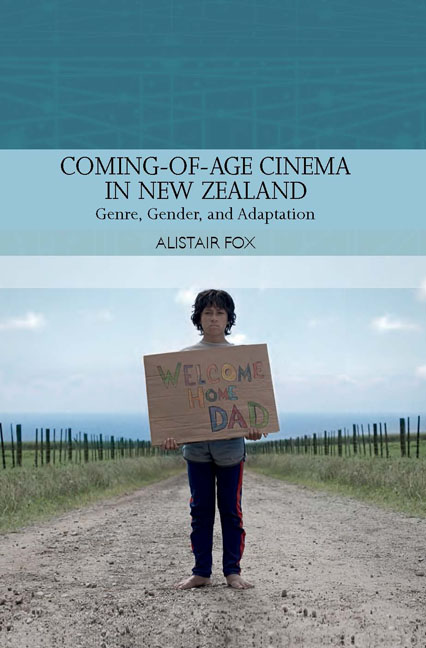
I went to the City Library to look for some books about writing or filmmaking that might be related to my question, I found this one focusing on New Zealand Coming-of-Age Cinema and after reading some of the introduction I thought it would be a good option as one of my theoretical texts (even if what the author is writing on is about a genre which I don't intend to focus on).
Unfortunately, I was unable to take out the book as it is a reference copy only, they told me I could scan specific pages of interest but I just snapped some photos with my phone of the sections I found most relevant to my own study.
Function of Films

I will have to also research the origin of storytelling and the Hero's Journey, I think those will give me good support for thinking that these things apply to more genres than just Coming-of-Age.
He says:
"Coming of Age narratives are ubiquitous in all cinemas, as in all national literatures, because they offer people a symbolic figuration that makes it able for them to understand who they are, and how they have come to be the way they recognize themselves as being."
I think this applies to more than just this isolated genre, I believe that he is right but that all forms of storytelling serve as a mirror in which people can help understand who they are, how they came to be that way and that it's done through symbolic figuration or metaphor. I believe this because that is exactly what I have experienced with my own writing, often they are representative of events of emotions in my real life, and by transforming them into the story I find myself coming to understand that specific arc in my life.
A good example of this from my own life is the Let's Split Up horror feature idea that I had during my time in Germany, I had felt that me and my girlfriend might be better splitting and going our own ways since out desires for life were so different, the story directly reflects that and the characters in it come to that same conclusion by the end. After writing it I found myself feeling relieved like some weight was lifted off me, and I could look at the situation more logically. My view changed since then, but the story perfectly encapsulates that period of change in my life.
The definition that I want to work off of during this Research is that we base stories on our own experiences and that the reason we tell stories is to share those experiences. This quote (while not inclusive of all types of storytelling) does support this idea.
Furthermore, it suggests that these films are successful and popular because of their ability to share individual experiences, which I can use as supporting evidence for why I want my stories to be infused with this type of personal inspiration.
In the second to last sentence, Fox also says that a filmmaker invariably places his own childhood and place where they grew up into the story, even when adapting another's work. This supports my theory that the writer or director can't help but put something of their own lives into a story, even when it isn't their own story that they are telling.
This entire paragraph is great support for my question, however it is too limiting in terms of the genre. Even still it helps me clarify what I should be focusing on as well - that I am looking at the function of storytelling itself as evidence as to why I want to infuse these stories with personal experiences.
Francois Truffaut


Fox quotes Truffaut in his book multiple times, he relates him to the origin of the coming-of-age film and describes how the French New Wave placed a new focus on the personal injections of a filmmaker into their work.
I would like to steal this quote as well:
"The film of tomorrow appears to me as even more personal than an individual and autobiographical novel, like a confession or a diary. The young filmmaker will express themselves in the first person and will relate what has happened to them: it may be the story of their first love or most recent; of their political awakening [...] it will be enjoyable because it is true."
I think a lot of what he said here is true but I also believe that things are not purely enjoyable just because they are true, my aim with the research this year is to find a way to tell something personal in an entertaining way that mass audiences can easily digest.
I am finding it difficult to focus completely on my question as it was, every new blog prompts so many new directions to go and I am just trying to keep the train on the tracks. This theoretical study is to support the idea that personal experiences are important to be put into a film, I will be looking at practical examples of how it's been done, but these texts are to show why they work.
My question could also be altered still, maybe I want to focus more on this distinction between how personal experience is presented on film, whether transparently or through allegory.
This quote came from a celebrated article from 1957 that Truffaut wrote: "The French Cinema Is Dying Under False Legends".
I went to the City Library to look for some books about writing or filmmaking that might be related to my question, I found this one focusing on New Zealand Coming-of-Age Cinema and after reading some of the introduction I thought it would be a good option as one of my theoretical texts (even if what the author is writing on is about a genre which I don't intend to focus on).
Unfortunately, I was unable to take out the book as it is a reference copy only, they told me I could scan specific pages of interest but I just snapped some photos with my phone of the sections I found most relevant to my own study.
Function of Films

Fox focuses on the Coming-of-Age film but he says some very interesting things when discussing the function of these films. When reading I considered the possibility that what he is saying might apply to most films and not just this specific genre, I was under the impression that the origins of storytelling were for sharing experiences - that's exactly what he describes these films to be about and I think an argument can be made that it applies to a larger demographic than what he attributes it to.
I will have to also research the origin of storytelling and the Hero's Journey, I think those will give me good support for thinking that these things apply to more genres than just Coming-of-Age.
He says:
"Coming of Age narratives are ubiquitous in all cinemas, as in all national literatures, because they offer people a symbolic figuration that makes it able for them to understand who they are, and how they have come to be the way they recognize themselves as being."
I think this applies to more than just this isolated genre, I believe that he is right but that all forms of storytelling serve as a mirror in which people can help understand who they are, how they came to be that way and that it's done through symbolic figuration or metaphor. I believe this because that is exactly what I have experienced with my own writing, often they are representative of events of emotions in my real life, and by transforming them into the story I find myself coming to understand that specific arc in my life.
A good example of this from my own life is the Let's Split Up horror feature idea that I had during my time in Germany, I had felt that me and my girlfriend might be better splitting and going our own ways since out desires for life were so different, the story directly reflects that and the characters in it come to that same conclusion by the end. After writing it I found myself feeling relieved like some weight was lifted off me, and I could look at the situation more logically. My view changed since then, but the story perfectly encapsulates that period of change in my life.
The definition that I want to work off of during this Research is that we base stories on our own experiences and that the reason we tell stories is to share those experiences. This quote (while not inclusive of all types of storytelling) does support this idea.
Furthermore, it suggests that these films are successful and popular because of their ability to share individual experiences, which I can use as supporting evidence for why I want my stories to be infused with this type of personal inspiration.
In the second to last sentence, Fox also says that a filmmaker invariably places his own childhood and place where they grew up into the story, even when adapting another's work. This supports my theory that the writer or director can't help but put something of their own lives into a story, even when it isn't their own story that they are telling.
This entire paragraph is great support for my question, however it is too limiting in terms of the genre. Even still it helps me clarify what I should be focusing on as well - that I am looking at the function of storytelling itself as evidence as to why I want to infuse these stories with personal experiences.
Francois Truffaut


Fox quotes Truffaut in his book multiple times, he relates him to the origin of the coming-of-age film and describes how the French New Wave placed a new focus on the personal injections of a filmmaker into their work.
I would like to steal this quote as well:
"The film of tomorrow appears to me as even more personal than an individual and autobiographical novel, like a confession or a diary. The young filmmaker will express themselves in the first person and will relate what has happened to them: it may be the story of their first love or most recent; of their political awakening [...] it will be enjoyable because it is true."
I think a lot of what he said here is true but I also believe that things are not purely enjoyable just because they are true, my aim with the research this year is to find a way to tell something personal in an entertaining way that mass audiences can easily digest.
I am finding it difficult to focus completely on my question as it was, every new blog prompts so many new directions to go and I am just trying to keep the train on the tracks. This theoretical study is to support the idea that personal experiences are important to be put into a film, I will be looking at practical examples of how it's been done, but these texts are to show why they work.
My question could also be altered still, maybe I want to focus more on this distinction between how personal experience is presented on film, whether transparently or through allegory.
This quote came from a celebrated article from 1957 that Truffaut wrote: "The French Cinema Is Dying Under False Legends".
Metaphoric Suggestiveness

I think that my essay will be about "The New Wave Horror Flick" that I observe to be a part of the cinematic landscape now and my personal exploration will be a breakdown of how to make one of those films using one's own life.
Steps for Essay
1) New Wave and Auteurship
This is what the this blog serves as the start of, in this section, I focus on what it means an auteur to put their own life on film and how those personal experiences relate to audiences.
I also mention that some can contain metaphorical suggestiveness (as Fox points out for me) which transitions us to:
2) Metaphorical/Allegorical storytelling
A look at why we share lessons through the use of allegory, where it started and why it is an effective form of communication.
3) 50's Sci-fi horror and Representation of Societal Fears
I focus specifically on the horror genre and look at how it has metaphorically represented societal fears to scare an audience, I look at why this gives these movies a greater feeling of importance and especially focus on the American 1950's sci-fi, horror movies, which very clearly represented the 'red menace' through their stories.
4) Modern Day Elevated Horror
This storytelling is now stronger than ever and is the basis for the self-titled modern-day "Elevated Horror" films, I look at some examples and illustrate why they are resonating with audiences even if the fears they represent aren't as universal. I define it as a type of New Wave Horror.
5) Personal Exploration and Results
I document how I went about trying to make one of these films and observe in what ways I succeeded or failed.
National Identity

Similar to the 1950's horror movies, coming-of-age dramas provide validation of a nations' combined identity, an individual making a film of his own personal experiences can be successful and resonate with audiences because the rest of the population can in some way relate to those experiences.

While not entirely metaphorical Fox observes that Coming-of-Age films have a metaphorical suggestiveness with some creative decisions. This feeds into my desire to look into how these movies about personal experiences work.
If I am talking about New Age movies and how they use personal experiences to tell stories, I can use this as theoretical support that they also employ the use of metaphor to make some ideas or themes stronger.
My question is about putting personal experience into entertaining horror, and this is the most obvious period in film history where the personal experience was lauded above all else. I am trying to blend entertainment and auteurship, two things often seen as separate. But there are many movies that achieve this, especially in horror with the new self-titled "elevated horror movies", things like Midsommar, Get Out and The Babadook. Movies that explore personal issues through the use of the horror genre.
I think that my essay will be about "The New Wave Horror Flick" that I observe to be a part of the cinematic landscape now and my personal exploration will be a breakdown of how to make one of those films using one's own life.
Steps for Essay
1) New Wave and Auteurship
This is what the this blog serves as the start of, in this section, I focus on what it means an auteur to put their own life on film and how those personal experiences relate to audiences.
I also mention that some can contain metaphorical suggestiveness (as Fox points out for me) which transitions us to:
2) Metaphorical/Allegorical storytelling
A look at why we share lessons through the use of allegory, where it started and why it is an effective form of communication.
3) 50's Sci-fi horror and Representation of Societal Fears
I focus specifically on the horror genre and look at how it has metaphorically represented societal fears to scare an audience, I look at why this gives these movies a greater feeling of importance and especially focus on the American 1950's sci-fi, horror movies, which very clearly represented the 'red menace' through their stories.
4) Modern Day Elevated Horror
This storytelling is now stronger than ever and is the basis for the self-titled modern-day "Elevated Horror" films, I look at some examples and illustrate why they are resonating with audiences even if the fears they represent aren't as universal. I define it as a type of New Wave Horror.
5) Personal Exploration and Results
I document how I went about trying to make one of these films and observe in what ways I succeeded or failed.
National Identity

Similar to the 1950's horror movies, coming-of-age dramas provide validation of a nations' combined identity, an individual making a film of his own personal experiences can be successful and resonate with audiences because the rest of the population can in some way relate to those experiences.
Comments
Post a Comment